
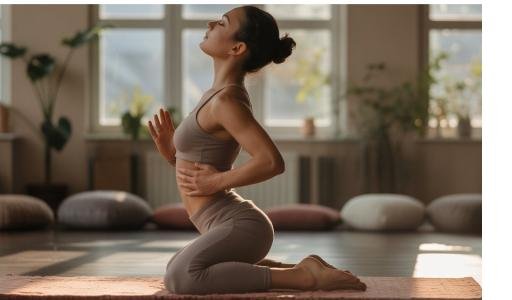
You can’t even feel the stress in your body. Odd, huh? But for the majority of people nowadays, that is true.
Deep inside your muscles is hidden tension. It gradually accumulates over time. It may go unnoticed at first. However, this tension has a significant impact on your day-to-day activities.
What Causes Your Body to Hide Tension?
There are numerous sources of stress. Pressure at work builds up rapidly. Concern is caused by family issues. Fear is brought on by financial difficulties. Even sitting too long generates stiffness.
Everything is stored in your body. Do you have poor posture at your desk? Your muscles tense up. A terrifying incident from the previous year? That fear is still on your shoulders. These trends persist for several months or even years.
Additionally, your brain attempts to defend you. Without asking, it makes muscles tense. This occurs so quickly that you are unaware of it. Tight muscles will soon feel natural to you.
How Somatic Yoga Operates Differently
The goal of somatic yoga is to sense your body from the inside out. It’s not about striking the ideal poses. Rather, it educates you to pay attention to what’s going on within.
This exercise proceeds slowly and delicately. You focus on every tiny movement. Fitness is not the aim; awareness is. You discover tension during this process that you were unaware of.
Your body is pushed into forms in traditional yoga. Somatic yoga enquires about your body’s demands. A huge difference! Change is forced by one. The other calls for recovery.
This approach also interacts with your nervous system. It facilitates the brain’s release of previous habits. At last, your muscles may truly relax.
Easy Motions to Reduce Severe Stress
Begin with little steps. Lay down on your back. Raise one shoulder 1 inch at a time. Hold it. After that, let it fall. Can you sense the difference?
Try soft twists next. Take a seat on the floor with your legs crossed. Rotate your body to the right. Go go as far as you are comfortable. Take three deep breaths. Turn to the left.
Rolling exercises are also beneficial. Roll your head from side to side while lying down. Go very slowly. Take note of any constricted areas. Inhale into those spaces.
Try the pelvic tilt as well. Bend your knees and lie flat. Rock your hips up and down gently. This relieves a lot of people’s lower back strain.
You learn to experiment with movement through somatic yoga. There is no right or incorrect approach. Your body is aware of its demands.
The Brain-Body Connection You Must Understand
Everything is under the direction of your neurological system. It determines when muscles contract or loosen. It is always on high alert due to stress.
A loop is produced as a result. Stress is an indication of danger. Your body stiffens. You become more anxious as a result of the tension. It goes around and around.
This circle is broken with somatic yoga. Your nervous system is calmed by slow movements. Your brain discovers that it’s okay to unwind. At last, the loop ends.
This is referred to by scientists as “neuroplasticity.” Your brain is capable of creating new patterns. It is possible to modify old tense habits. Stress won’t stay with you forever.
Why You Might Miss Your Hidden Tension with Regular Yoga
Regular yoga lessons are fast-paced. Every few breaths, a new pose is adopted. You concentrate on performing them accurately. There isn’t much time for introspection as a result.
Additionally, a lot of classes emphasise strength and flexibility. You give it a good stretch. You strike challenging stances. Sometimes, rather of relieving tension, this increases it.
The opposite strategy is used in somatic yoga. The movements are small and straightforward. You may hardly move at all. However, the outcomes are far more profound.
Consider it this way. Your body’s murmurs are muffled by a noisy workout. You can easily hear them if you practise quietly.
Indications There’s Hidden Tension in Your Body
Do you unconsciously clench your jaw? That’s tension that’s buried. Tight shoulders that slowly rise to your ears? Tension once more.
A lot of individuals store tension in their necks. Some people experience it in their hips. Some people have it in their stomachs. Everybody has a unique pattern.
Hidden tension is typically indicated by poor sleep. This also applies to feeling exhausted all the time. Stiff joints, headaches, and back pain also suggest it.
Emotional symptoms also manifest. You may experience anxiety for no apparent reason. or easily agitated and impatient. Physical tension is often the source of these emotions.
Establishing Your Own Home Practice
No extra equipment is required. While not necessary, a yoga mat is helpful. For many movements, even your bed functions well.
Every day, set aside ten to fifteen minutes. For most individuals, the morning works best. But any time that works for you is ideal.
Begin simply. Select two or three motions. Perform them mindfully and slowly. Pay attention to how your body feels. Notice changes, even tiny ones.
Gradually, you’ll discover your tight spots. Your neck needs care on certain days. On other days, your hips feel immobile. Follow your body’s lead.
With practice, somatic yoga gains strength. You become more conscious. Tension is already apparent to you. Release occurs more quickly.
Breathing’s Function in Tension Release
Your body and mind are connected through breathing. Breathing shallowly traps tension. Your nervous system receives signals of safety from deep breaths.
Now give it a try. Inhale quickly and shallowly. What are your feelings? Most likely a little tense. Now take deep, leisurely breaths. Different, right?
During somatic yoga, breathe naturally. Nothing should be forced. Just observe your breath as you go. Allow things to flow naturally.
Tension can sometimes make it difficult to breathe. Your chest is constricted. It becomes labour to breathe. Your breathing returns to normal as you move gently.
How Much Time Does It Take to See Results?
Some folks pick up on changes right away. They feel lighter after only one session. They can move their bodies more freely.
Some require several weeks. Over years, tension accumulated. Reversing those patterns takes time. Have self-compassion.
Duration is not as important as consistency. One lengthy session once a week is inferior to ten minutes every day. Regular reminders to relax are necessary for your nervous system.
Results may also surprise you. Perhaps you get better sleep first. or the frequency of headaches decreases. Emotional changes follow physical ones.
Integrating Everyday Life with Somatic Yoga
Anywhere is a good place to practise mindfulness. Standing in queue? Take note of your posture. At your desk? Look for stiffness in your shoulders.
This extends the practice of somatic yoga beyond the mat. Your life becomes a practice area. Every second is an opportunity to decompress.
Feel your feet on the floor as you wash the dishes. Keep your jaw relaxed when you’re on the phone. These little things quickly add up.
Your body eventually maintains a more natural state of relaxation. Tension is detected before it accumulates. It becomes simpler to prevent than to treat.
Typical Errors People Make
It is counterproductive to rush through movements. Slowness is necessary for somatic yoga to be effective. Speed totally obstructs awareness.
Self-criticism is another error. There’s nothing to aim for. There is no perfect stance. just investigation and education.
Some people exert excessive pressure. They are looking for quick outcomes. Instead of reducing tension, this increases it. Here, gentleness always prevails.
Furthermore, ignoring the inner attention is a mistake. It is not helpful to go through motions unconsciously. The change is the result of your attentiveness.
Why It’s More Important Than Ever to Practice This
Stress is a constant in today’s world. Your body is strained by screens. Your mind is troubled by news feeds. There is no downtime in schedules.
This speed wasn’t meant for your body. Processing and release take time. That opportunity is provided by somatic yoga.
Your health is also impacted by hidden tension. Your immune system is weakened by it. Blood pressure is increased by it. It interferes with digestion. It is important to take care of it.
What medicine cannot provide is provided by this practice. Body awareness is not taught by pills. Stress patterns are not disrupted by them. That work can only be done by you.
Beginning Your Adventure Today
Start now. Close your eyes and take a comfortable seat. Inhale deeply and slowly three times. Take note of your body’s sensations.
In its most basic form, that is somatic yoga. Presence, awareness, and breath. Nothing fancy or complex.
Try one mild movement tomorrow. A shoulder roll, perhaps. or a stretch of the neck. Go slowly and easily.
One day at a time, develop your practice. There’s no hurry. This is how long your body has been waiting. It can wait a little while longer for your undivided attention.
conclusion
Your joy and energy are stolen by hidden tension. It creates barriers that keep you from being comfortable. Fortunately, somatic yoga provides a gradual route back to relaxation.
Regular exercise is not the same as this practice. Nothing is pushed or forced by it. Rather, it reminds your body how to unwind.
You’ll discover stress you were unaware of by moving slowly and practicing deep awareness. Then you’ll let it go, breath by breath. New, healthier patterns will be taught to your nervous system.
The simplicity of somatic yoga is what makes it so beautiful. You don’t require any particular abilities or adaptability. simply being open to hearing what your body has to say. to act kindly. to exercise self-compassion.
Today, start small. Take note of one tense location. Inhale it. Gently move. That’s sufficient. You’ll do it again tomorrow. Your body will become softer every day. Your thoughts will become silent. It will feel lighter.
Your body has been hanging on for a very long time. It’s time to let it go now. You can learn how through somatic yoga.
FAQ
What precisely is somatic yoga?
The gentle practice of somatic yoga emphasises inner body awareness. It helps you identify and let go of tension by using deliberate, slow motions. It’s not about flexibility or flawless positions like normal yoga.
What distinguishes somatic yoga from traditional yoga?
Attaining particular poses and developing strength are frequently the main goals of regular yoga. Feeling your body from the inside out is the main focus of somatic yoga. They move more slowly and in smaller steps. Fitness is not the aim; mindfulness and stress release are.
Is somatic yoga suitable for beginners?
Indeed! For beginners, somatic yoga is ideal. Both flexibility and experience are not required. The motions are soft and easy. You are not under any pressure to work at your own pace.
How frequently should I do somatic yoga?
It is best to practise every day, even for ten minutes. Still, three or four times a week yields positive outcomes. Long sessions are not as important as consistency. To develop new patterns, your nervous system requires frequent practice.
Is special equipment required? No special equipment is required. While useful, a yoga mat is not necessary. You can practise on your bed, a rug or carpet. All you really need is comfortable clothing.
When can I expect to get results?
After just one session, some people feel different. Others need a few weeks of regular practice. The length of time you’ve carried tension will determine this. Within two to four weeks, most people start to notice changes.
Can back pain be treated with somatic yoga?
Yes, somatic yoga helps a lot of folks with back problems. It enhances body awareness and aids with the release of tense muscles. However, always check with your doctor about serious or chronic pain.
Is somatic yoga useful for anxiety?
Of course! Somatic yoga soothes your nervous system. This relieves anxiety naturally. The gentle movements and deep breathing teach your brain it’s safe to relax. Many folks feel calmer after just one session
Can I do somatic yoga if I’m not flexible?
Indeed! In somatic yoga, flexibility is irrelevant. You’re not attempting to reach challenging poses or extend far. Little, delicate motions are as effective. In actuality, those who are less adaptable frequently gain the most.
What time of day is ideal for practicing?
Morning is wonderful because it creates a peaceful atmosphere for the day. But any time works. Some folks prefer to decompress in the evenings. Decide on a time when you will practise regularly.
Can regular exercise be replaced with somatic yoga?
For bodily awareness and stress alleviation, somatic yoga is fantastic. It does not, however, offer strength or cardio training. Consider it an addition to other forms of exercise rather than a substitute. Both are worthwhile.
Will somatic yoga make me more flexible?
Somatic yoga frequently results in a natural improvement in flexibility. But that’s not the primary objective. Your body becomes more flexible as tension is released. Although this appears to be flexibility, it actually results from relaxation rather than stretching.
.